
Jeremy Trombley
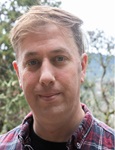
Assistant Professor - Sociocultural Anthropology
PhD 2016 (University of Maryland)
Office: Social Science Centre 3314
E-mail: jtrombl@uwo.ca
Research Interests
We face enormous environmental challenges presently and in the years to come ranging from climate change to pollution and natural disasters. The way that we organize ourselves collectively to address these challenges is a crucial factor in how we respond to them. I work to investigate the intersection of science and social organization in addressing environmental challenges. In particular, I am interested in the way that people draw on scientific practices to understand and manage water and watersheds. My research shows that scientific practices play a role in developing social organizations that help to address environmental challenges not only by providing knowledge that can assist in the process, but also by fostering connections that enable organizing to take place across spatial scale and varied institutional and cultural systems.
I have conducted ethnographic research on environmental science and systems of social organization for over fifteen years. My research has taken me from the Great Basin region to the Chesapeake Bay watershed along the Atlantic Coast of North America and to the Pacific Northwest. I have studied a range of issues including nutrient pollution, aquatic invasive species, and glacier recession and worked with organizations like the Smithsonian Institute, Sea Grant, and the International Joint Commission to improve understanding of the social dimensions of water conservation. My current research projects continue this trajectory into new issues and regions. In collaboration with the Canadian Severe Storms Lab and a colleague from York University, I am developing a nation-wide survey examining the social factors that shape how people experience flash flooding. Additionally, I am interested in investigating the role that scientific practices play in Indigenous land management in the Skagit River basin in Washington State. Finally, I seek to understand how transboundary watersheds are managed along the US-Canad border.
In addition to these primary research interests, I also pursue other academic and artistic interests including: a photo-ethnographic study of piles, basket-weaving with foraged materials, and theorizing environmental alienation. My background in the anthropology of science and technology also leads me to an interest in our collective relationship with technologies like Artificial Intelligence, space exploration, and infrastructure. All of these interests also intersect for a love of experimental music, science fiction, horror, and role playing games.
I am interested in advising graduate students at the Master’s and PhD level who are engaged in research involving water, environmental governance, and environmental science and technology.
List of Selected Publications
2025. Trombley, Jeremy. “Assembling, Channeling and Orienting: The Performative Roles of Computer Models in Environmental Management Institutions.” Water Alternatives. Vol. 18, No. 2, pp. 289-304.
2020. Trombley, Jeremy. “Watershed Subjects: Computer Modeling and The Making of Ecological Subjectivity in the Chesapeake Bay Watershed.” In Routledge Handbook of Ecocultural Identity, Tema Milstein and José Castro-Sotomayor, eds.
2019. Trombley, Jeremy. “Navigating Institutional Constraints for Computational Environmental Modeling.” Coastal Management. Vol. 46, No. 5, pp. 453-570.
2018. Trombley, Jeremy. “Watershed Encounters.” Environmental Humanities. Vol. 10, No. 1, pp. 107-128.
Teaching
I have taught the following graduate and undergraduate courses:
- ANTHRO 1025 – Introduction to Sociocultural and Linguistic Anthropology
- ANTHRO 1026 – Introduction to Biological Anthropology and Archaeology
- ANTHRO 2286 – Computers Culture Connectivity
- ANTHRO 2288 – Climate Science Change
- ANTHRO 3223 – Doing Fieldwork
- ANTHRO 3372 – Applying Anthropology
- ANTHRO 3393 – Climate Risk and Justice
Graduate Supervision
I am interested in supervising in topics involving environmental issues and the anthropology of science and technology.