
Lindsay Bell
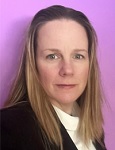
Associate Professor - Sociocultural Anthropology
PhD 2013 (University of Toronto)
MA 2006 (University of Alaska, Fairbanks)
BEd 2002 (Nippissing University)
BA 2001 (Université d’Ottawa)
Office: Social Science Centre 3312
Tel: 519 661-2111 ext. 82541
E-mail: lindsay.bell@uwo.ca
Research Interests
I came to anthropology by way of teaching. I began my career as an elementary school teacher in a small Indigenous community in the Arctic where I saw firsthand how relationships between education, colonialism, and wellbeing were more complicated than I had been taught. That realization sent me first to the University of Alaska Fairbanks for a master's degree in Northern Languages, Culture and Education, and then into a PhD in education and anthropology.
My body of scholarship explores intersections between language, political economy, aspiration, and embodied social inequality, pursued across several global contexts, with a focus on circumpolar regions.
Indigenous interpretation and communicative sovereignty in the Northwest Territories. My current research centres on Etaehtı: Tłı̨chǫ Interpreters Project, a partnership between the Tłı̨chǫ Department of Culture and Lands Protection (DCLP), Dr. Sara Komarnisky (University of Alberta), and myself. Etaehtı — the Tłı̨chǫ word for interpret or translate, meaning to carry one voice to another — documents the life and work of Tłı̨chǫ interpreters, past and present, through life history interviews, a "living timeline" of archival materials, and participant observation of interpreters at work and in training, alongside the Tłı̨chǫ Government's own pilot delivery of a Tłı̨chǫ Language Interpreter Training Program. All research outputs remain the property of the Tłı̨chǫ DCLP. This work is expanding into a broader study of interpretation across the Northwest Territories' eleven official languages — where paid interpreters mediate high-stakes governance, legal, medical, and cultural proceedings, yet their own experience of that work has rarely been documented. The project is supported by a Social Sciences and Humanities Research Council of Canada grant ($25,000), with myself and Dr. Sara Komarnisky as Co-Investigators. I am also developing a book manuscript drawing on this research, situating Tłı̨chǫ interpreters' life histories against the archival record of Treaty 11 negotiations and later land-claims proceedings. This work is expanding thanks to the help of my colleague Dr. Tania Granadillo.
Large-scale resource extraction in the Arctic. My engagement with these themes began with a critical analysis of the changing place of Indigenous life and Arctic extractive environments in (inter)national public culture. This work culminated in my book, Under Pressure: Diamond Mining and Everyday Life in a Northern Town (2023, University of Toronto Press, Teaching Culture Series), and in a co-authored book on the intersections of language, class, and extraction-driven migration, Sustaining the Nation: Natural Resources and the Making of a National Linguistic Minority (Oxford University Press, 2016).
Under Pressure won the 2025 Labreque-Lee Book Prize from the Canadian Anthropology Society.
The transnational governance of extractive industries. My second project examined the transnational configuration of "transparency" across the gemstone supply chain. Funded by the Wenner-Gren Foundation for Anthropology and the Swiss National Science Foundation, the research linked my ongoing work on diamond harvesting and corporate ethics in Canada's Arctic to a broader examination of how corporate ethics of transparency are enacted at scale. Findings appear in a special issue of TSANTSA: Journal of the Swiss Anthropological Association (co-edited with Filipe Calvão and Matthieu Bolay), "Dis/connection Matters: Natural, Synthetic, and Digital." Our contribution, "Ashes to Diamonds: Making Lab-Grown Afterlife," examines the emergence of diamonds made from cremated human remains and the technical and semiotic work of those who make and market them.
Feminized medical experience: weight, fertility, and reproductive imaging. My most recent work examines people's experiences with feminized medical problems — weight gain, infertility, and the interventions meant to address them. I have published on racializing health discourses in pre-diabetes prevention programming on college campuses (Bell 2019). My own experience of infertility led to my ongoing project, Picturing Embryos, which investigates the social impact and cultural meaning of embryo images among people who have undergone IVF in Canada and the United States. Drawing on interviews with IVF patients, the project asks how photographic and time-lapse imaging of embryos changes the way people understand, grieve, and relate to the reproductive process — putting the social science of medicine into conversation with theories in semiotic, visual, and cultural anthropology.
Select Publications
2026. "Building Future Disappointments: Architectures of Extraction in Sub-Arctic Canada." In "Promised Futures," edited by Ibrahim Ince and Erick Moreno Superlano. American Ethnologist website, July 9.
2023. Under Pressure: Diamond Mining and Everyday Life in a Northern Town. University of Toronto Press.
2021. (with Filipe Calvão & Matthieu Bolay). “Introduction: Dis/connection matters: Natural, Synthetic, and Digital”. TSANTSA: Journal of the Swiss Anthropological Association. Volume 26. Pages 7-17
2019. Instructing / Improvising Health: Neoliberalism and Pre-diabetes Prevention on a US College Campus. Culture, Theory and Critique. 60:0, 33-49, DOI: 10.1080/14735784.2018.1543606
2017. “Soft skills, hard rocks: Making Diamonds Ethical in Canada’s Northwest Territories” FOCAAL: Journal of Global and Historical Anthropology. Pp.74-88
2016. “Searching for Evidence Based-Traditions: Addiction treatment in Canada’s Northwest Territories”. Medicine Anthropology, Theory. 3(1).
2016. Sustaining the Nation: Natural Resources and the Making of a National Linguistic Minority. Oxford UP. With Monica Heller, Michelle Daveluy, Hubert Noel and Mireille McLaughlin.
2012. “In Search of Hope: Mobility on the Canadian Frontier” In Lem, W and P Gardiner-Barber (eds.) 21st Century Migration: Ethnography and Political Economy. Routledge: London, 207-246.
2011. Heller, Monica & Lindsay Bell “Frontiers and Frenchness: pride and profit in the production of Canada”. In Alexandre Duchêne et Heller, Monica (éd.), Language in Late Capitalism: Pride and Profit. London: Routledge, 254-285.
2010. “Economic Insecurity as Opportunity: Job Training and the Canadian Diamond Industry” in Daveluy, M, F Lévesque, and J Ferguson (eds.) Humanizing Security in the Arctic. Canadian Circumpolar Institute Press: Edmonton, 293-304.
Public Anthropology
Mackenzie Place is an immersive installation depicting the near-arctic town of Hay River (Xátł’odehchee) and the K’atl’odeeche First Nation in Canada’s Northwest Territories. It is the outcome of a longstanding collaboration with artist Jesse Colin Jackson that aims to “picture the north” as heterogenous and variable rather than reproducing further cliched images of the arctic as a place of either extreme fragility or boundless opportunity. Mackenzie Place explores the legacies of colonialism through an unlikely lens, by holding the viewer’s attention on the structures of development and how people live within them.
Recent Research Funding
2025. Social Sciences and Humanities Research Council of Canada. Etaehtı: Tłı̨chǫ Interpreters Project. Partnership with the Tłı̨chǫ Department of Culture and Lands Protection. Co-Investigator, with Dr. Sara Komarnisky (University of Alberta), $25,000.
2022. Research Mobilization, Creation, and Innovation Grant ($7,000)
2017-2020. Granting agency: Swiss National Science Foundation.
Project Title: Transparency: Qualities and Technologies of Global Gemstone Trading
Role: Co-Investigator
Principal Investigator (PI): Filipe Calvão Graduate Institute of International and Development Studies, Geneva. $550,000 CHF.
2017-2019. Granting agency: Wenner Gren Foundation for Anthropology.
Project Title: Tracing Transparency: Qualities and Technologies of Global Diamond Trading
Role: Principal Investigator, $17,000
2014-2016. Granting agency: Social Sciences and Humanities Research Council of Canada.
Project title: Visualizing Canada’s Urban North.
Role: Principal Investigator, Insight Development Grant, $75,000
Teaching
In the classroom, I hope students come away with an appreciation for careful observation, thoughtful listening, and the discipline of setting assumptions aside. My current course repertoire is broad, including Introduction to Cultural Anthropology, Language and Culture, Anthropological Theory, Sex and Gender, Visual Anthropology, and Medical Anthropology, as well as area courses on the anthropology of the United States, Indigenous North America, and the Circumpolar World.
Students who take my courses come to know my "secret classroom" — a tucked-away space in the Social Science Building where we gather after completing observational fieldwork to move from observation to analysis. It's where I get to watch students talk through their ideas with each other until they hit that "aha" moment where the seeds of a good paper take root — one of my favourite parts of teaching.
NOTE: I am taking graduate students in exceptional circumstances only. Those with research interests with strong overlap with my existing areas and a record of excellence can reach out with a description of their proposed work.